Nintendo's Patent for Dual-Mode Battle System Rejected by USPTO
By Published Apr 1, 2026, 2:22 PM EDT Kyle Gratton is an editor and writer based out of Kansas City. He received a bachelor's degree, dual majoring in English and History with a minor in Film and Media Studies, and has been a senior staff writer and reviewer for Screen Rant's Gaming section since 2026, with roles in editorial, and various freelance projects.
A terminal Midwesterner who graduated from the University of Kansas, Kyle also has knowledge and interest in literature, film, film adaptions of literature, and history.
Find Kyle on Bluesky:
and Letterboxd: follow Follow followed Followed Like Like Log in Here is a fact-based summary of the story contents: Try something different: Show me the facts Explain it like I’m 5 Give me a lighthearted recap
is a notoriously litigious company, fervently defending its first-party properties, including , but it has now hit a major obstacle in its patent endeavors. last year claiming exclusive rights to game design mechanics involving summonable characters, regarding a specific dual-behavior model that would let said summoned characters act either independently or under player direction.
The United States Patent and Trademark Office has now rejected that patent, U.S. Patent No. 12,403,397, after Nintendo opted not to file a response to the USPTO head opening a reexamination of the patent late last year, according to a thorough legal analysis by . In patent law parlance, Nintendo's patent being "rejected" does not necessarily mean the USPTO's decision is final; Nintendo now has two months to respond to the rejection, though this time frame can be extended, and the larger legal battle is likely to take much longer.
Patent Of Pokémon Innovation Rejected By US Patent & Trademark Office

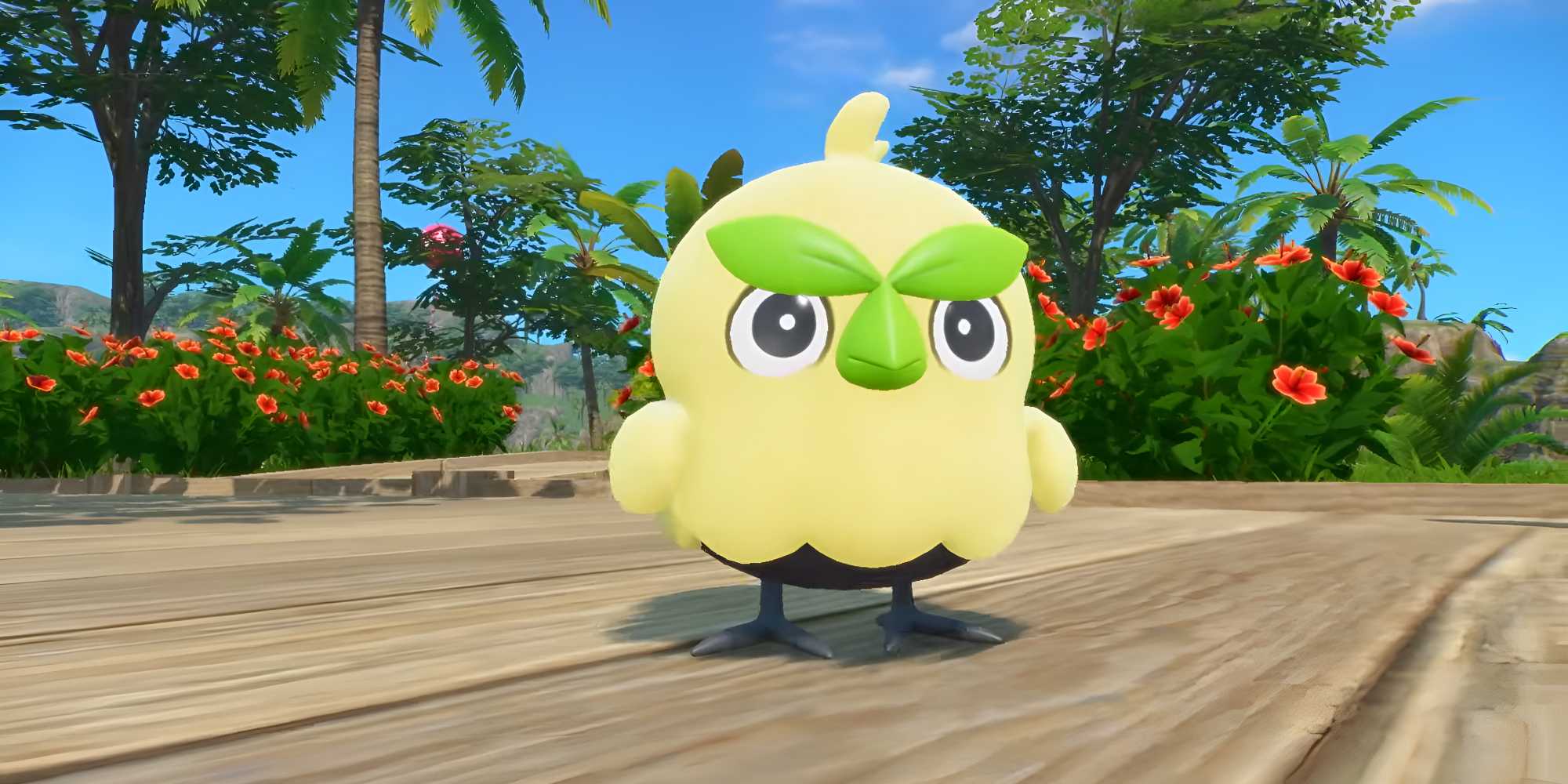
Very basically, Nintendo is attempting to patent a specific Pokémon battling mechanic introduced in Pokémon Scarlet and Violet, the ability for a summoned character (e.g., a Pokémon) to engage in combat in two distinct ways: the traditional turn-based manner controlled by the player, or freely roaming nearby to battle on its own. The patent was met with a lot of scrutiny upon its filing, mostly due to the potentially wide-reaching restrictions it could impose on other developers.
Following the USPTO's rejection of Nintendo's patent, the two-in-one battle system remains non-proprietary, pending further legal action presumed to be coming from Nintendo. The USPTO's decision to reject said patent is actually the result of previously filed patents, two from Nintendo, one from Konami, and another from Bandai Namco. These four patents are being used in various combinations by the USPTO to argue that Nintendo's invention – the two-in-one battle system – is obvious, a patent law term used to designate a concept that someone of ordinary skill could conceivably come up with (thanks again, Games Fray).
How This Affects Nintendo & Pokémon

There are effectively no immediate ramifications of this decision with regard to game design and development. Since Nintendo's patent has been rejected, it has no legal grounds (in the U.S.) to sue others creating similar systems. This is conceivably only for the time being, though. Nintendo's patent contains 26 claims, all of which are being individually rejected by the USPTO via the aforementioned combinations of previously filed patents.
Nintendo will likely attempt to defend all 26 claims, though its patent can still exist in some form with just a single claim intact, giving the company legal power to sue over that particular claim. At this point, it's far too early to predict any sort of outcome beyond the presumption that Nintendo is going to fight to have its patent upheld.
Add this to Nintendo's ever-growing list of legal battles, alongside its developer Pocketpair, its , and perhaps the only one in which people may actually be rooting for Nintendo, . Patents have been a particular sticking point in Nintendo's practices in the past, with drawing similar criticism for potentially stifling creativity in the medium. Pokémon's relatively new battle mechanics remain in legal limbo for the time being, and Nintendo has a long road ahead to get its patent approved.
Nintendo is one of the world's most successful and popular video game companies. It was founded in 1889 by Fusajiro Yamauchi, who started the company by making Japanese playing cards. When Nintendo broke into the video game industry, it exploded in popularity. Nintendo has released several consoles over the years, such as the Nintendo Entertainment System (NES), Nintendo 64, Gameboy, Wii, and the Nintendo Switch. The company has also created several iconic franchises like Mario, The Legend of Zelda, Animal Crossing, and Pokémon.
Expand Collapse
Follow Followed Like Share Close Trending Now